Protected: Subterranean Homesick Blues
Enter your password to view comments.


This Halloween, Lindsay and I acquired a painting called That Feeling When You Get a Sweet New Tool. It is spray paint stencil art on plywood, and it depicts an average-looking, white-collar hobbyist, holding a soldering gun with a happy look on his face.
We bought the painting along with another piece by the artist, SKWRL, at a Halloween party silent auction at the Brooklyn Navy Yard; a location synonymous with the maker movement and manufacturing Renaissance.
(Check out the hosts here!)
The happy feeling of getting a new tool is relatable. This is precisely what the whole Maker Movement is based on. The look on the guy’s face is like he got a new toy, which is a feeling that seems to have been lost in an era where downloading an app just isn’t the same. It’s interesting that utilitarian tools are replacing what we used to have for consumer electronics. So it’s kind of rare that you get that giddy new toy feeling, and that’s what’s exciting about this dorky piece of an ordinary guy, getting something he’s really into.
The maker movement is all about pragmatism, building stuff, and frugality, and now it’s working its way into an amateur art market as well. I’m not saying that That Feeling When You Get a Sweet New Tool will be worth millions of dollars one day, but art seems desperate to try to imitate life here.
Does the maker movement really need a fine art to justify its validity? It feels like an inversion.
At PS11, Architecture Day is a Saturday reserved for a workshop in which kids, ages 9-12, get an early exposure to architecture. I first became aware of the project through Kimberly Murphy, an architect and proud parent of two PS11’ers. Architecture Day is one of those activities where volunteers seem to get just as much out of it as the children enrolled in the school.

The day began with a simple kick-off activity that I developed for everyone to warm up with. We handed out plotted measuring tapes and a packet of questions that were written to be fun, open-ended, and would promote collaboration. We also introduced the project, redesigning the PS11 playground. To help illustrate, volunteers tapped out a large scale site on the floor and shared 11 x 17 floor plans to sketch on.
During the course of the day, I felt I had a lot in common with my third, fourth, and fifth-grade “studio mates”. In hindsight, we (the volunteers) were doing design and the kids were essentially our clients. All students had ideas for what they wanted in their projects, but not necessarily the skills to put it all together. As architects, it was our job to tease out the concepts within, and synthesize ideas into a piece that the kids could see and ultimately hold.
A great example of this was when the kids in our group wanted to build an outdoor stage. My partner, Lindsay, and I suggested that it might rain, or that the sun could be too bright. With that, the kids began working on a stage canopy. Fortunately, another group had already been working on building umbrellas and was able to contribute their expertise. The “umbrella group,” which was now aware of the issues the stage group was working on, shared their ideas with the “hammock group.” Soon, a special type of hammock stand was developed with an integrated umbrella.
Another one of the challenges we faced along the way, was finding the right balance between developing a student’s new ideas and contributing to existing projects. On the one hand, you want to find a way to make every single student’s idea come to life, but on the other, this is just not possible––not to mention that you will quickly run out of space and energy. It actually benefits everyone if volunteers do their best to absorb ideas, and encourage students to work together in groups. It results in a much more organic collaboration of ideas and less micromanaging on the volunteers’ part, which of course means more time for them to focus on leading the group.
A lot of what I’m talking about here easily translates to how grown-ups act or should act within a creative environment. It also fleshes out a lot of what I think it means to organize a project. What I think is important about this example is that it deals with kids for two particular reasons: Not only is it important to foster this learning approach early on, but it could prove valuable to continue approaching adults with the same clarity and simplicity. If you can master this process with kids, who operate at the simplest level of creativity, I think you can lay the right foundation for working creatively with peers.
More information about Architecture Day is available via the ESKW/A Blog, or on the sidebar. Also check out videos with our collaborator, NYCOBA.
Maybe our whole approach to data storage is wrong. What if we were less precise?
If memory were more like instinct, where there were just a little bit of information necessary to get to the big idea, then that would be more natural. Birds don’t have a program in their heads to build the same nest again, and again, exactly the same as the last one -they build something similar to the last one. Why do humans have this weird need for perfect duplication?
What if computers had a small amount of the critical information saved, and then AI extrapolated off of that and produced the result. Obviously it would be hard to convince someone to use an external hard drive that offers to backup their data *sort of.* So my theoretical “instinct drive” would have to be for other applications. Imagine music retrieved in a way like this. A song played on repeat may sound just a little bit different each time if a machine were essentially improvising as it went along. Arguably that’s a more realistic music-listening experience.
I also recently learned that physical data storage has shrunken to the point where electrons are “jumping” through walls and the memory is essentially forgotten. That sounds like a sign of peak memory to me!
I also remember learning that the human brain has the memory capacity of a compact disc, roughly 1.7 GB. I think everyone’s first reaction is, “that can’t possibly be correct, I can think of way more stuff than what will fit on a CD.” But there’s an important distinction to be made between what is “thought” of as a new idea, and what is actually recalled.
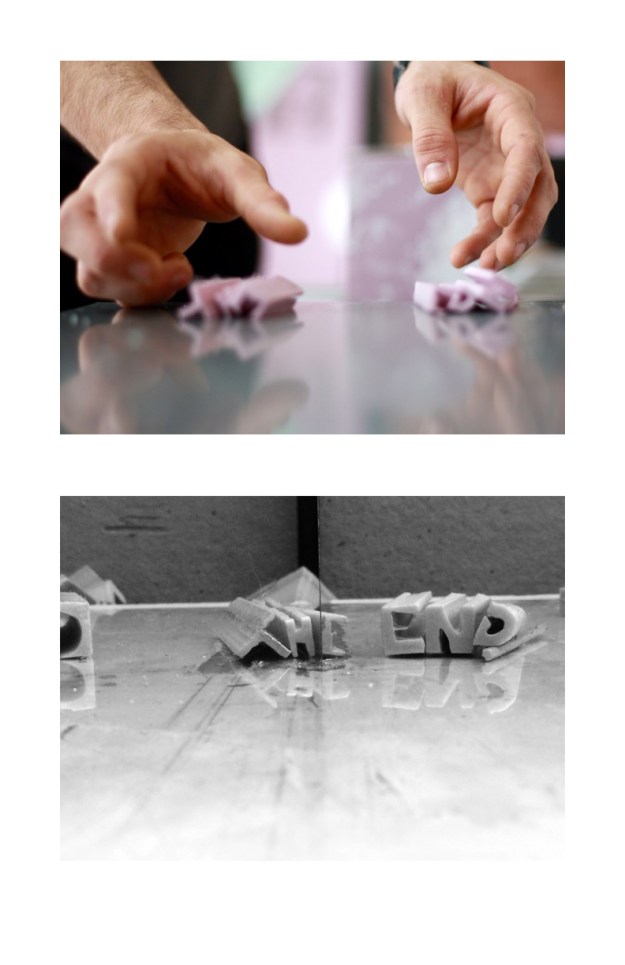
When I started architecture school at Pratt a professor introduced me to the YouTube channel, frank howarth, an Architect turned woodworker. Since then I’ve enjoyed watching his hobbyist career grow into that of a highly-skilled artisan. His early videos feel like exercises to develop a vocabulary for his current work -almost like he followed some divine syllabus.
Building a “kit-of-parts” is a design approach that gets tossed around a lot in architecture school, but I don’t think I really understood it until seeing Frank Howarth pull it off on such a timeline. In a way, he is still following this very traditional architecture school practice, but he’s documenting it all online. Feedback from the YouTube community creates a feedback loop. The interaction drives the energy and the energy drives the creativity.
I hope that education follows this trend. I believe that platforms like YouTube enable everyone to have access to an infinite classroom and an unlimited amount of education.
 Frank Ball